Cultivating Leaders: Women, Land, and Community in Guatemala | Somos Impact Travel
Somos Impact Travel
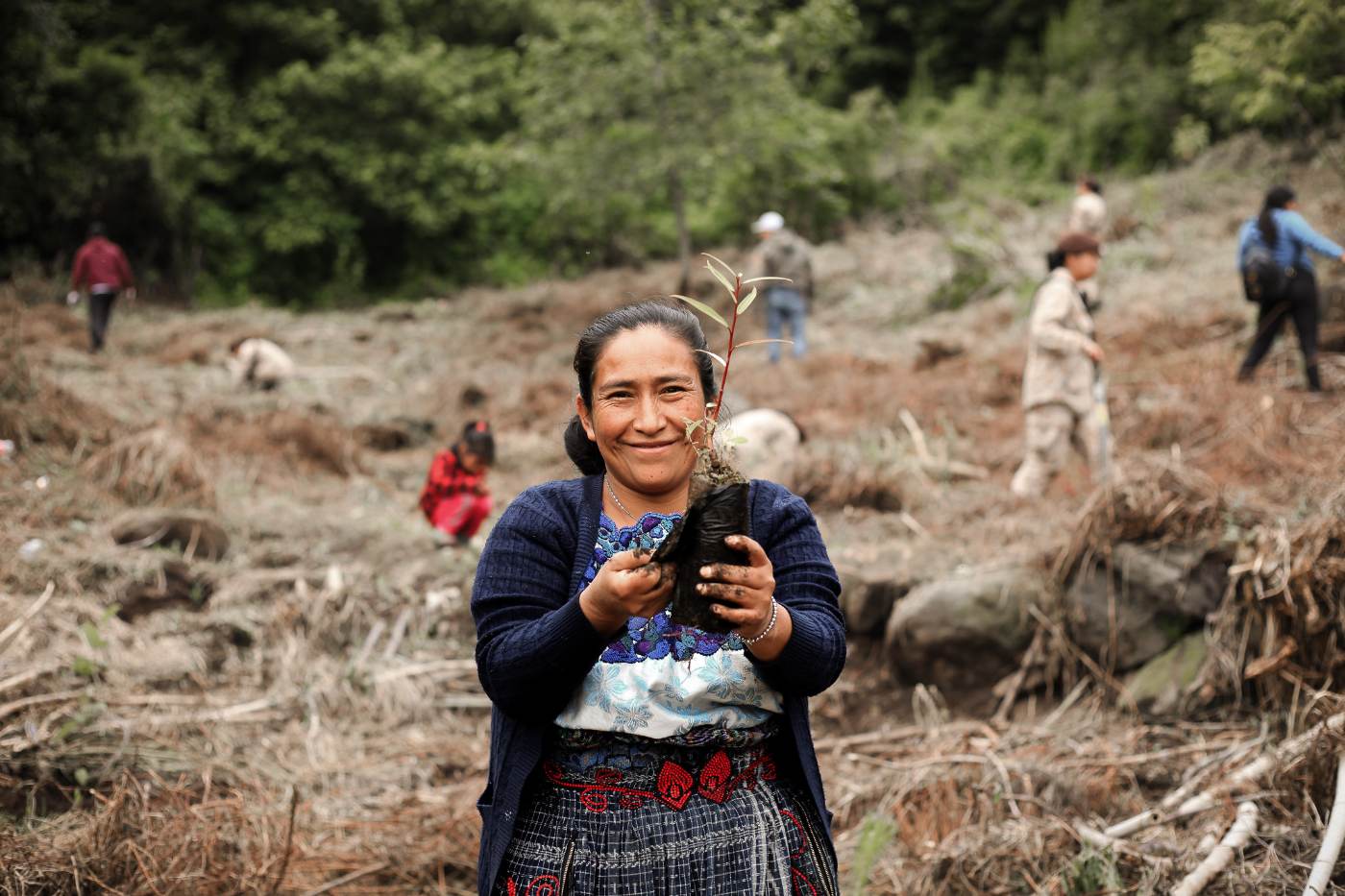
Indigenous women from Wellkind Guatemala's nursery program holding native tree seedlings
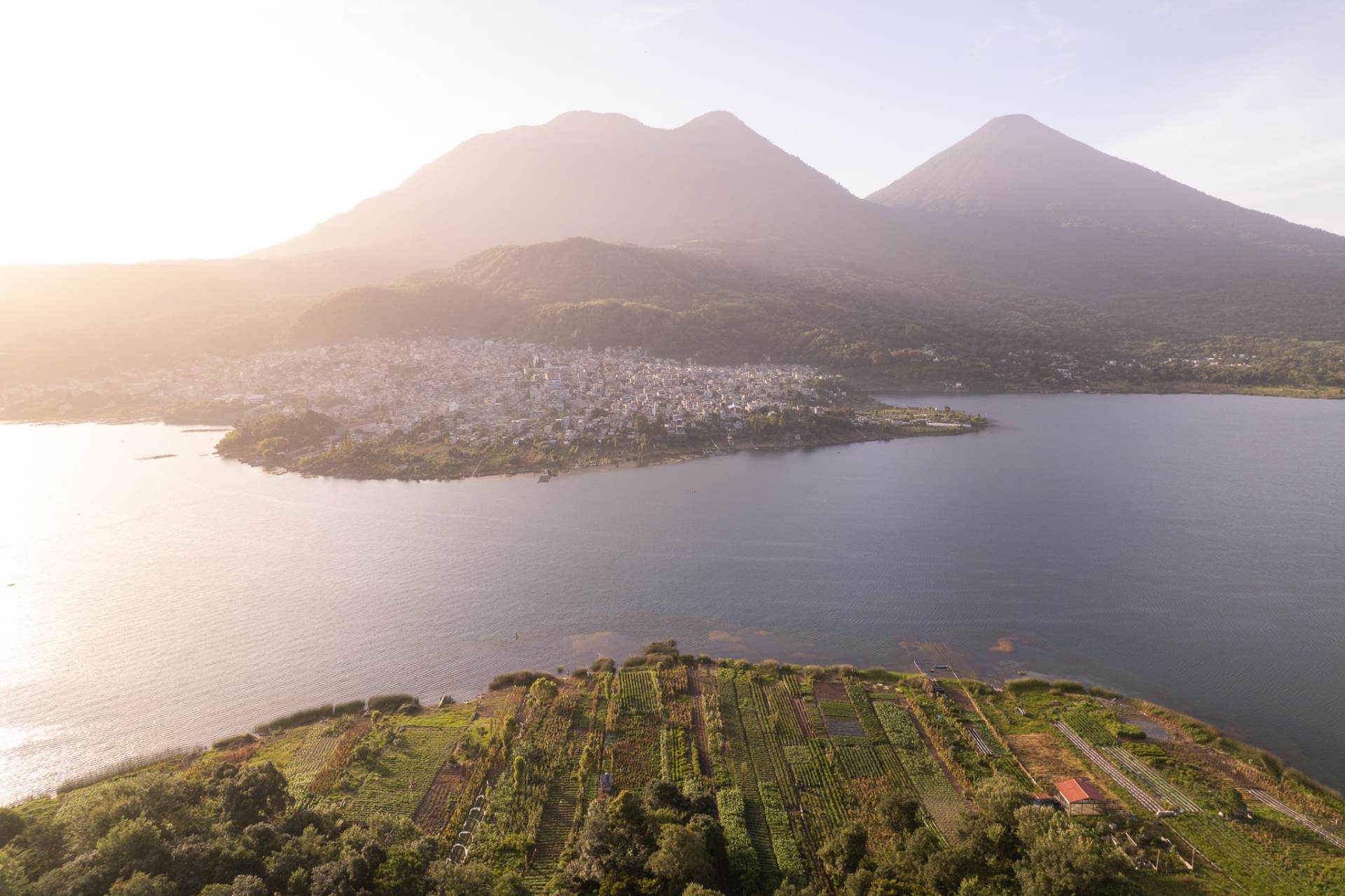
Sunrise over Lake Atitlán and its volcanoes
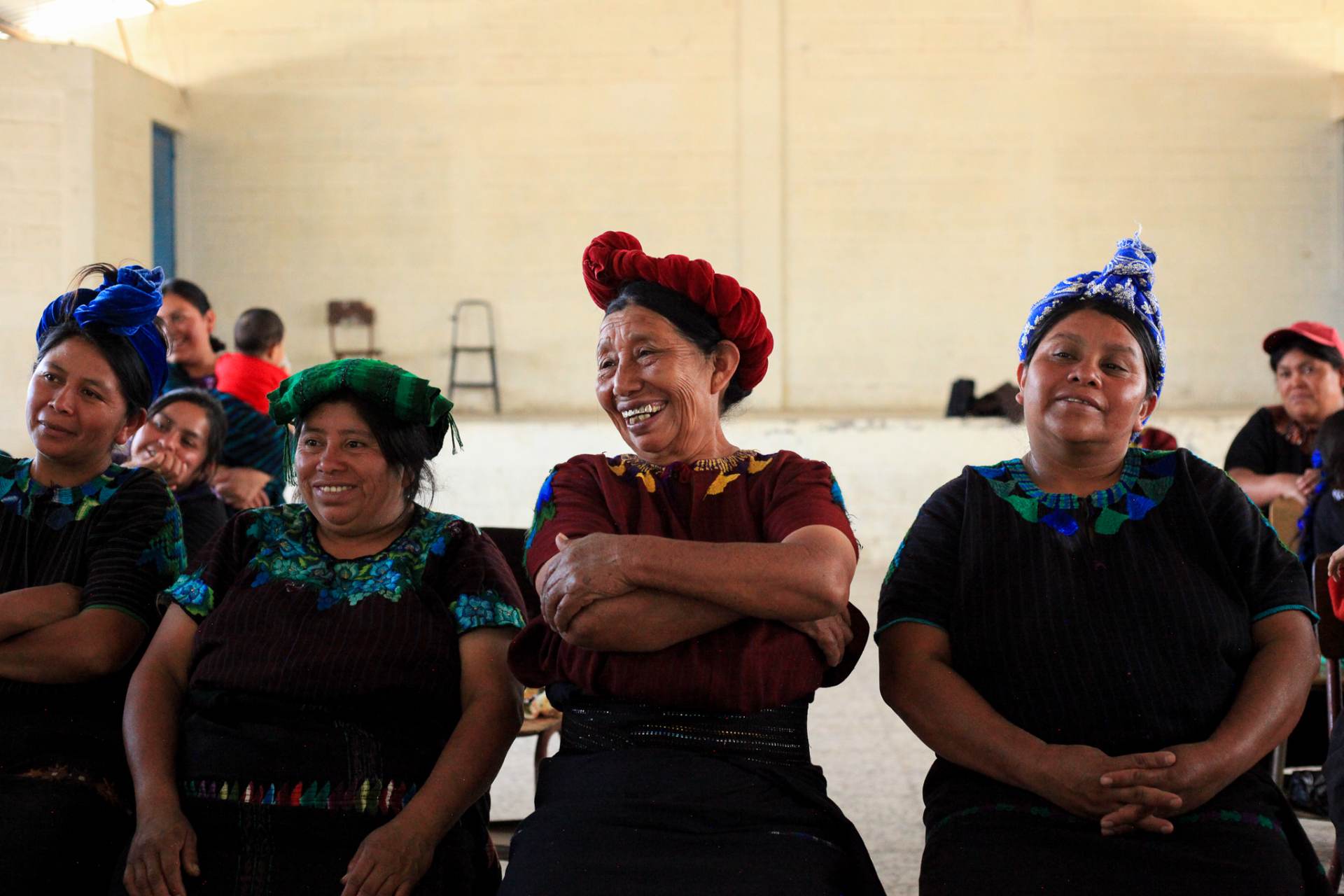
Tz'utujil women in traditional headwraps laughing together during a community meeting
Aerial view of a lakeshore town and farm plots on Lake Atitlán
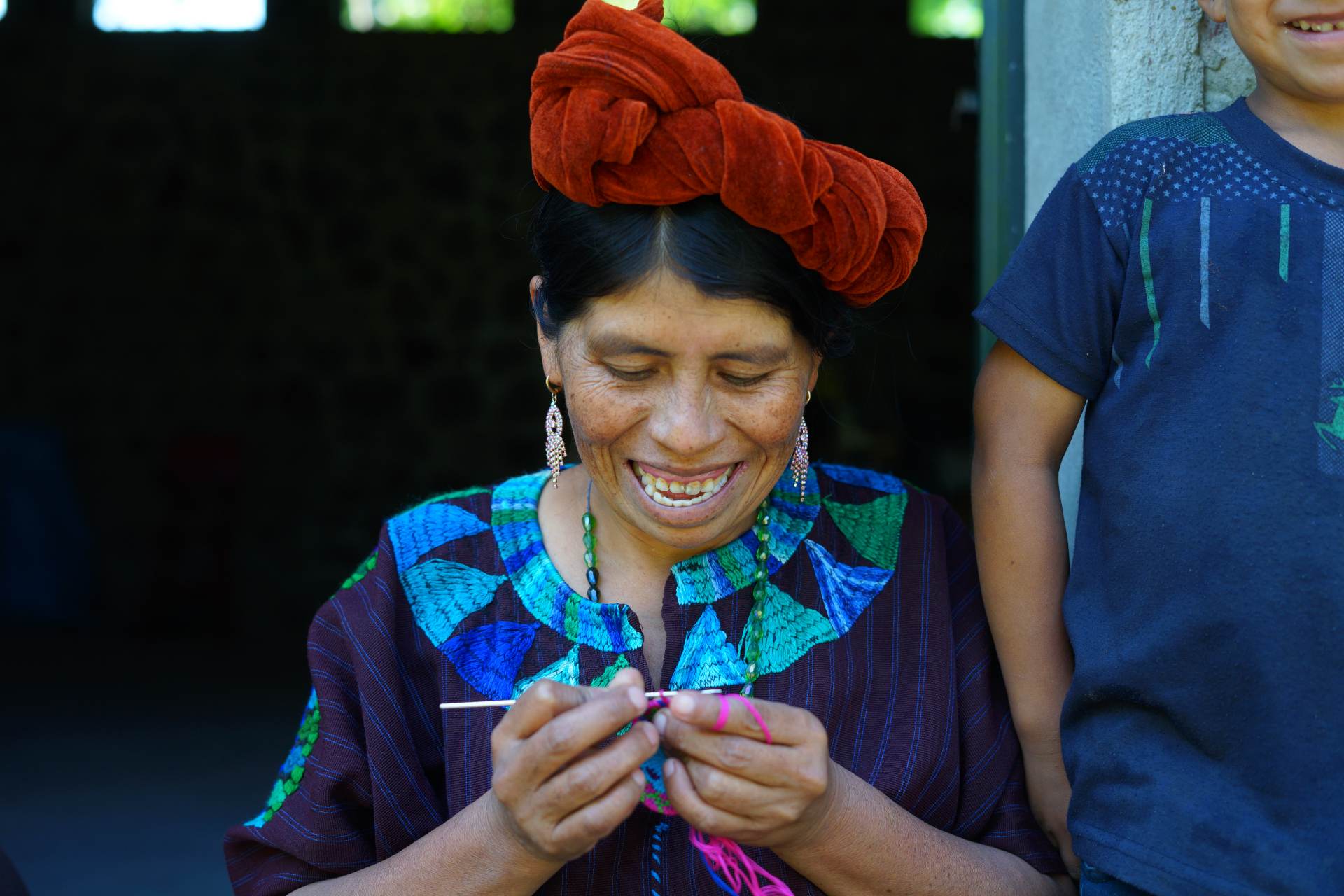
A Maya artisan smiling as she crochets in an embroidered huipil
Guatemala · 9-day learning expedition · High school

Cultivating Leaders: Women, Land, and Community in Guatemala

A women's leadership and environmental stewardship immersion at Lake Atitlán, for high school groups.

01 / 05
Duration9 days, 8 nights
Group10 to 20 students, plus adult leaders
LocationsAntigua, Iximche, Lake Atitlán, Volcán Pacaya
DatesFlexible, set to your travel window
Program rate$3,550 per student, airfare included
The program

Learn from Indigenous Women at Lake Atitlán.

What does it mean to lead and to steward the land you depend on? Over nine days, students meet women running weaving cooperatives, directing grassroots water NGOs, managing tree nurseries, and leading community health and education programs. At every stop, leadership and environmental stewardship turn out to be the same story told from different angles.

Students sit with their peers at MAIA School, an all-girls Indigenous school, in a structured exchange. They work alongside Wellkind Guatemala's Indigenous women's nursery team and meet the leadership of Water for Life Global, a community-driven NGO addressing the lake's water crisis through women-led programs. Daily reflection and journaling tie each encounter back to one driving question.

A woman holding a native seedling during a reforestation planting
The driving questions

What does leadership look like when it grows from the land? What can students learn from women who have been answering that question for generations?

Students examine these questions from five vantage points. The women they meet do not separate their leadership from their relationship to the watershed, forest, and lake. The connection between the two is the curriculum and understanding it is what students carry home.

Lenses of inquiry
01

History

Antigua

Women whose leadership shaped Guatemalan resistance, culture, and survival through colonial violence and its aftermath.

02

Land and Cosmology

Iximche · Volcán Pacaya

What it means to build a civilization around a living, active landscape.

03

Cooperation

Lake Atitlán

Women who organized weaving cooperatives, water filtration programs, and reforestation nurseries as acts of community sovereignty.

04

Education

MAIA School

What an all-girls Indigenous school looks like, who built it, and what it means for the next generation of Indigenous women leaders.

05

Conservation

Wellkind Guatemala

Indigenous women who manage native tree nurseries as both livelihood and ecological stewardship.

Field educators in-country lead every site visit and reflection session.

Itinerary at a glance

Antigua and Lake Atitlán

Full day-by-day itinerary
Day 1 · Antigua

Arrival and Women's History in Colonial Antigua

Guided walking tour and welcome dinner.

Boutique hotel, colonial district
Day 2 · Lake Atitlán

Iximche and the Highland Road to the Lake

Kaqchikel Maya ruins, then the drive into the Atitlán basin.

Bambu Guest House or homestay
Days 3 to 6 · Lake Atitlán

Cooperatives, Water, School, and Forest

Weaving and natural dye, Water for Life Global, MAIA School, Konojel, Wellkind's nursery, permaculture farm, waterfall hike, kayaking.

Bambu Guest House or homestay
Days 7 and 8 · Antigua

Volcán Pacaya and Closing Reflection

Lava-field hike, farewell dinner, and a free day in Antigua.

Boutique hotel, Antigua
See the full itinerary
Safety and student support

Safety Makes Everything Else Possible

Every Somos program runs on protocols developed and refined across 10+ years of operations in Guatemala, with year-round in-country presence.

24/7 In-Country Support

A named Somos contact on call at all hours, with escalation protocols and detailed emergency action plans for every program location.

CPR and First-Aid Certified Guides

Bilingual guides certified in CPR and first aid, with comprehensive medical kits on every activity.

Licensed and Insured Transport

Every road and boat provider is vetted, licensed, insured, and experienced with student groups.

10+ Years of Field-Tested Risk Management

Location-specific protocols for water transport, volcanic terrain, altitude, and homestays. Host families are vetted and experienced with student groups.

Women artisans from a Lake Atitlán cooperative gathered in a garden
About Somos Impact Travel

We Build the Bridge. Local Leaders Do the Teaching.

Most student trips move fast: students arrive, take photos, and leave, and the communities that hosted them stay exactly where they were. The relationship never has time to form. Somos Impact Travel designs partnership-based learning expeditions around the opposite pace.

Our NGO partners and community leaders are the teachers and the protagonists of every program, never the supporting cast. That is a structural choice, not a marketing line. The cooperatives, schools, and NGOs in this program are relationships built through years of direct partnership. Somos holds a leadership role at Wellkind Guatemala and works directly with MAIA School's founders, board, and head of school.

Somos was started by educators and travel leaders with decades in the region. The communities we work with do not need saving. They need advocates who listen, and partners who return.

10+
years operating in Guatemala
1,000+
travelers guided
15+
Indigenous community partners
Testimonials

From Somos Travelers in Guatemala

"I learned that language is a sense of connection and not a barrier."
Student · Sage · Guatemala · 2025
"I made friendships and even planted a garden and trees that I hope will help to support the local community for a long time."
Cora Nelson · Boise High School · Guatemala · 2025
"I learned that I'm able to make friends through all forms of communication, even if it isn't language."
Gabbie Dingman · Boise High School · Guatemala · 2025
"I learned that I move very quickly in my everyday life, and even in the busiest moments, it's okay to slow down and enjoy what's going on."
Emma Slattery · Boise High School · Guatemala · 2025
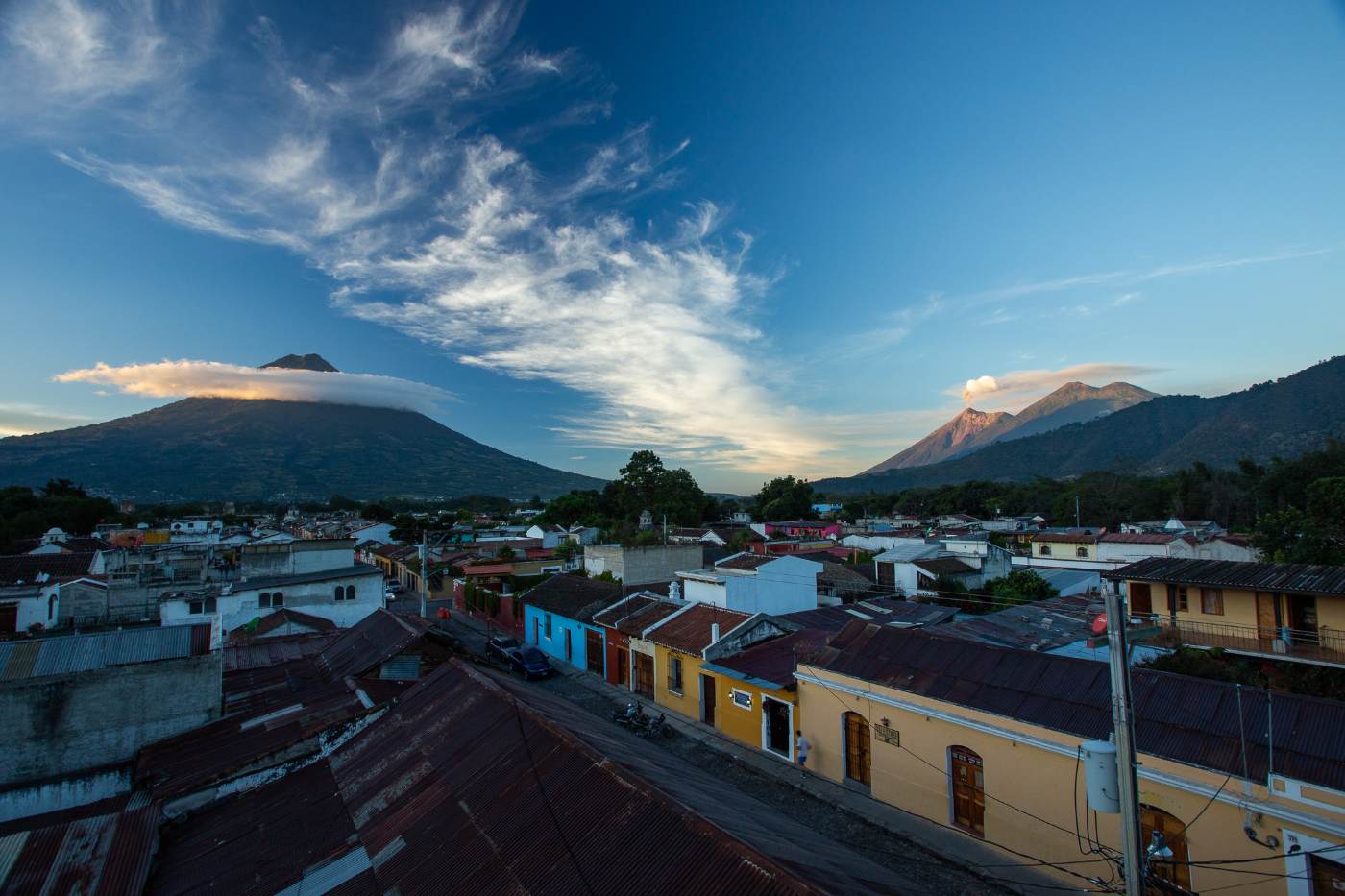
Antigua rooftops at dusk with Volcán de Agua and Fuego behind
DAY 1Antigua

Arrival in Antigua

Students arrive in one of the Americas' most intact colonial cities, built on top of Maya civilization and shaped by centuries of Indigenous resistance and cultural survival. The first evening orients students to Antigua as a place where women's leadership has been forged through colonial violence, displacement, and resilience. That frame runs through every site visit that follows.

Afternoon
  • Airport pickup at La Aurora International Airport, Guatemala City, and private transfer to Antigua (about 1-2 hours)
  • Check-in at a hotel in the colonial district
  • Guided walking tour, Women in Guatemalan History: sites connected to Indigenous resistance, colonial-era women leaders, and modern activism; Central Plaza and the Santa Catalina Arch; orientation to the volcanoes Agua, Fuego, and Acatenango
Evening
  • Welcome dinner at a traditional Guatemalan restaurant
  • Program orientation and opening reflection
  • Introduction to the driving question

Overnight: Boutique hotel, Antigua
Logistics: Airport pickup, road transportation, urban orientation, accommodations arrival

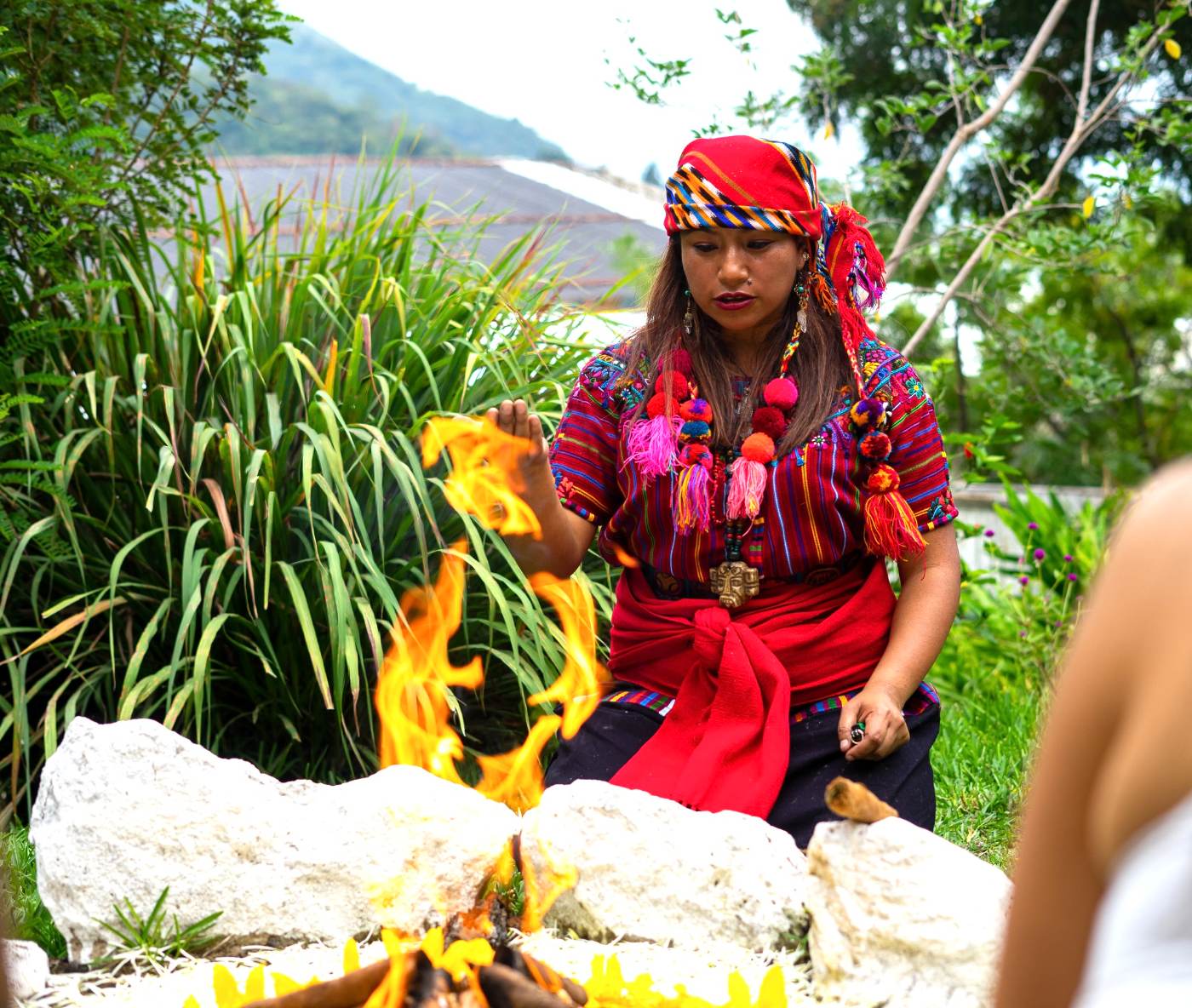
A Maya spiritual guide tending a ceremonial fire
DAY 2Iximche · Lake Atitlán

Journey to Lake Atitlán

Moves from Spanish colonial Antigua into Kaqchikel Maya civilization at Iximche before the road climbs into the Lake Atitlán basin. The morning grounds the group in a history that predates and outlasts colonization; the drive that follows carries that history into the landscape the group experience over the next five days.

Morning
  • Breakfast at the hotel and departure toward the lake
  • Guided Iximche visit with a local Indigenous guide: ceremonial plazas, pyramid structures, and ball court
  • Kaqchikel Maya history and cosmology
Afternoon and evening
  • Lunch in a nearby highland town, then the scenic highland drive to Lake Atitlán (3 hours)
  • Check-in at Bambu Guest House, or homestay in San Juan la Laguna, per your group's option
  • Orientation to the lake, its volcanoes, and the communities ahead; welcome dinner
EVENING REFLECTIONWhat does it mean that Iximche's plazas and ball court are still standing, still visited, and still meaningful six centuries after conquest?

Overnight: Bambu Guest House, Tzununa, or homestay in San Juan la Laguna
Logistics: Highland road transportation, archaeological site terrain, altitude management, homestay check-in protocols if applicable

An artisan spinning cotton beside baskets of naturally dyed yarn in San Juan la Laguna
DAY 3San Juan la Laguna

Women's Weaving Cooperative and Natural Dye Traditions

San Juan la Laguna is one of the most organized communities of women artisans in Central America. Its weaving and natural dye cooperatives are economic sovereignty in practice: women who built their own supply chains, set their own prices, and passed textile knowledge down through generations while creating financial independence for their families. Students take part in the work.

Morning
  • Boat to San Juan la Laguna
  • Maya weaving cooperative: backstrap weaving, cooperative organizing, fair trade practices, and the meaning in textile patterns and colors
  • Natural dye workshop with indigo, cochineal, and marigold; students try weaving or dyeing alongside artisan instructors
  • Traditional lunch with a local family or at a cooperative restaurant
Afternoon
  • Walk through San Juan and visit additional women-led coffee, honey, or craft cooperatives depending on availability
  • Optional artisan purchases
Evening
  • Homestay check-in with host families (if participating) and dinner with Spanish practice at home
EVENING REFLECTIONWhat does economic leadership look like when it is built around traditional knowledge?

Overnight: Homestay in San Juan la Laguna, or Bambu Guest House, Tzununa
Logistics: Boat transport, cooperative visit protocols, homestay check-in, cultural sensitivity briefing

Aerial view of Lake Atitlán with lakeshore farm plots and volcanoes
DAY 4Lake Atitlán

Water for Life Global and a Day on the Lake

Lake Atitlán is one of the most beautiful lakes in the world and one of the most ecologically threatened. The volcanic geology that makes it spectacular also leaves it vulnerable to algae blooms driven by wastewater and agricultural runoff. Water for Life Global works on that crisis from inside the community, led by Indigenous women who see the lake as the foundation of community life. Students spend the morning with that team before taking to the water themselves.

Morning
  • Water for Life: discuss Lake Atitlán's water crisis and community consequences
  • The Bienestar Comunitario program, led by Indigenous women
  • Village water filter distribution and greywater treatment systems in action
  • Meet women leaders trained through the organization's leadership program, with open Q&A
  • Optional participation in filter distribution or a lake cleanup
Afternoon
  • Beginner instruction on kayaking or paddleboarding and swimming (weather permitting)
Evening
  • Dinner
  • Journaling time
EVENING REFLECTIONWhat does environmental leadership look like when the ecosystem you are protecting is also the one you live inside?

Overnight: Homestay in San Juan la Laguna, or Bambu Guest House, Tzununa
Logistics: Boat transport, water activity safety, PFDs required, swimming supervision

Women leaders from a Lake Atitlán community gathered under the trees
DAY 5MAIA School · San Marcos la Laguna

MAIA School Visit and Konojel Community Programs

Day 5 is the heart of the program. MAIA School is an all-girls Indigenous school at Lake Atitlán founded on the belief that Indigenous girls deserve the same educational opportunities as anyone else in Guatemala. Somos works directly with the school's founders, board, and director of development, and the school's leadership has said this is exactly where a school-to-school exchange needs to happen. Students sit with MAIA students around a shared question: what does it mean to lead? The encounter is a conversation between equals.

Morning: MAIA School
  • Structured exchange with MAIA students: facilitated conversation, shared activities, and peer dialogue about education, leadership, and the futures both groups want
  • Meet MAIA's educators and leadership team to learn about the school's founding and the partnerships that sustain it
  • Discussion: who fought to build this school, and what do MAIA students say it has changed for them?
Afternoon: Konojel, San Marcos la Laguna
  • Healthy Babies Program: nutrition and maternal health led by women educators
  • Young Leaders Scholarship Program: addressing educational barriers for Indigenous youth
  • Traditional lunch at Konojel Restaurant, prepared by women staff, and a conversation about women's roles in community development
Evening
  • Return to accommodations
  • Dinner
  • Journaling time
EVENING REFLECTIONWhat did the conversation with MAIA students tell you about your own education, and what did Konojel tell you about leadership organized around community need?

Overnight: Homestay in San Juan la Laguna, or Bambu Guest House, Tzununa
Logistics: Boat transport, school exchange cultural protocols, community visit preparation, student supervision during free exchange

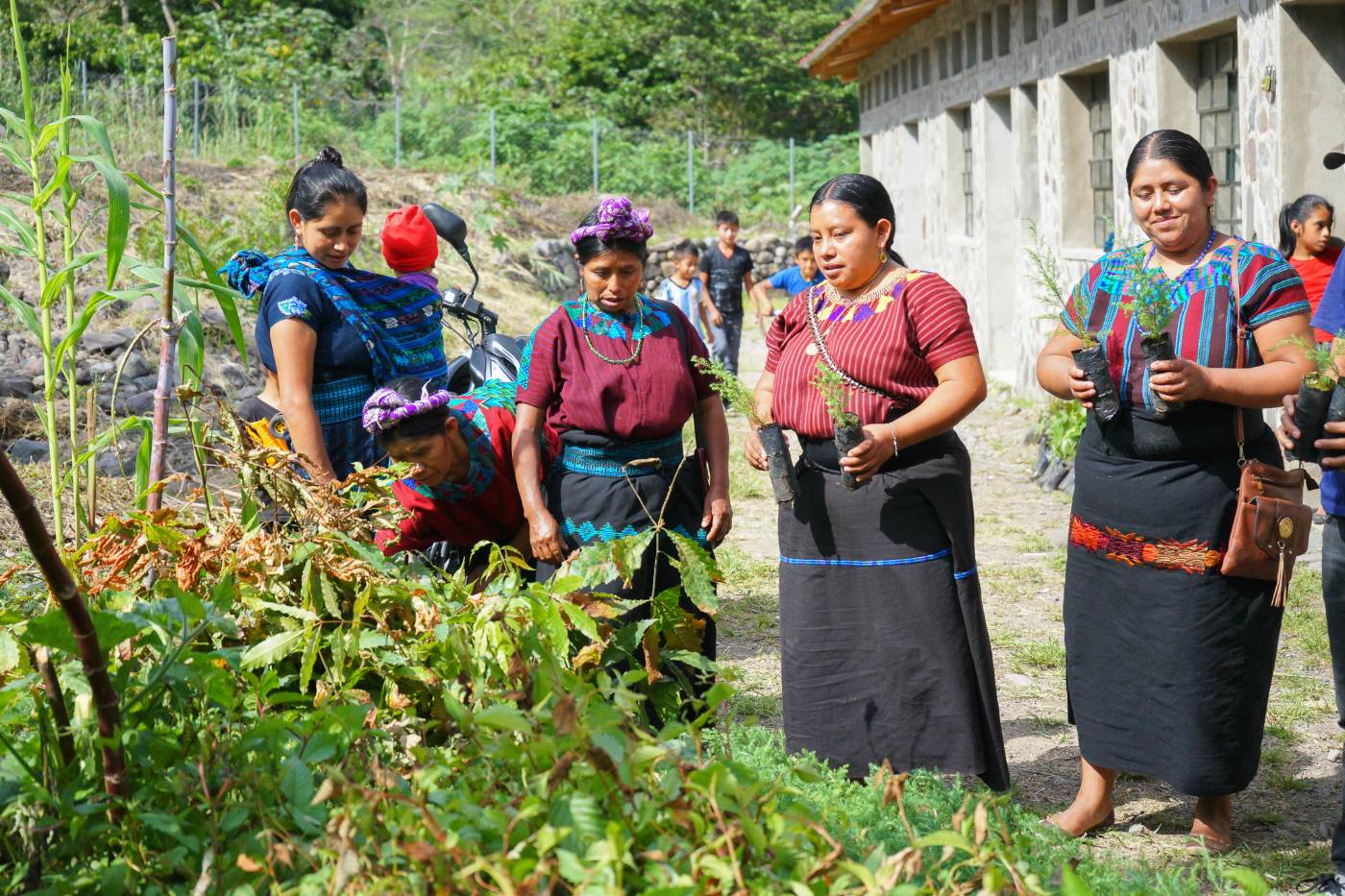
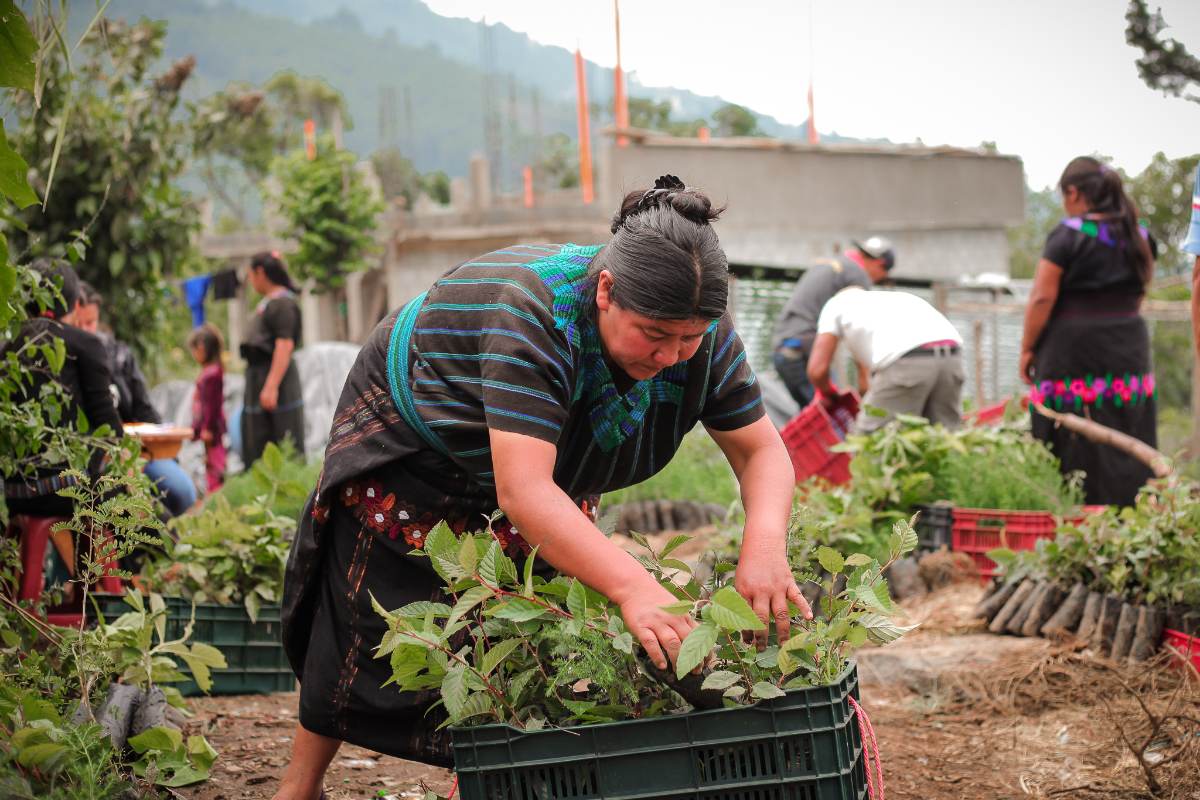
Women from Wellkind Guatemala's nursery team carrying native seedlings A nursery worker sorting seedlings in a crate Two students planting a native sapling
DAY 6Wellkind Guatemala · Tzununa

Wellkind Women's Nursery, Permaculture Farm, and Waterfall Hike

Wellkind Guatemala has planted over 200,000 trees since its founding, with a goal of 50,000 a year across 15+ Indigenous communities. The women who manage its native tree nursery are the technical experts: they know which species go where, how to prepare seedlings for highland conditions, and how watershed health and community livelihoods connect. Students work alongside them in the morning, then walk a permaculture food forest and climb to the Tzununa waterfall.

Morning: Wellkind women's nursery cooperative
  • Hands-on seedling preparation and potting alongside the women staff
  • Native species selection, watershed health, and why the right tree in the right place matters
  • How nursery work provides sustainable income while supporting conservation outcomes
  • Wellkind's model: 200,000+ trees planted, 50,000 a year, 15+ community partnerships, 80%+ survival rate
Afternoon: permaculture farm and waterfall
  • Guided tour of a permaculture food forest: polyculture design, composting, and water harvesting, and how traditional Maya agriculture informs it
  • Moderate hike to the Tzununa waterfall (1.5 to 2 hours), with a chance to get under the falls
Evening
  • Dinner
  • Students write their own definition of environmental leadership based on what they have witnessed
EVENING REFLECTIONOf all the women you have met this week, whose leadership approach resonated most, and why?

Overnight: Homestay in San Juan la Laguna, or Bambu Guest House, Tzununa
Logistics: Nursery safety protocols, moderate hike terrain, waterfall activity supervision, hydration management

A student group with their guide on the lava fields below Volcán Pacaya
DAY 7Volcán Pacaya · Antigua

Volcán Pacaya and the Return to Antigua

The return to Antigua is where the week's threads get tied together, starting with the volcanic geology that has shaped every farm, terrace, and lakeshore students have studied since Day 1. The route runs by way of Volcán Pacaya, where the hike climbs through tropical forest onto hardened lava fields still warm underfoot, before the group descends to the closing dinner that gives the week its shape.

Morning
  • Homestay farewell breakfast and gratitude exchange, if participating
  • Transfer to the Pacaya trailhead and guided ascent through tropical forest to the lava zones
  • Field discussion on volcanism and tectonics, tying the week's landscapes together
Afternoon
  • Continue to Antigua and check in
  • Free time for the artisan market and personal journaling
Evening
  • Farewell dinner at a traditional restaurant and closing reflection
EVENING REFLECTIONWhat is the most surprising leadership insight you are carrying home from this week?

Overnight: Boutique hotel, Antigua
Logistics: Homestay checkout, extended road transport via the Pacaya trailhead to Antigua, lava field footing, heat and altitude exposure on the ascent, urban group management on the final night

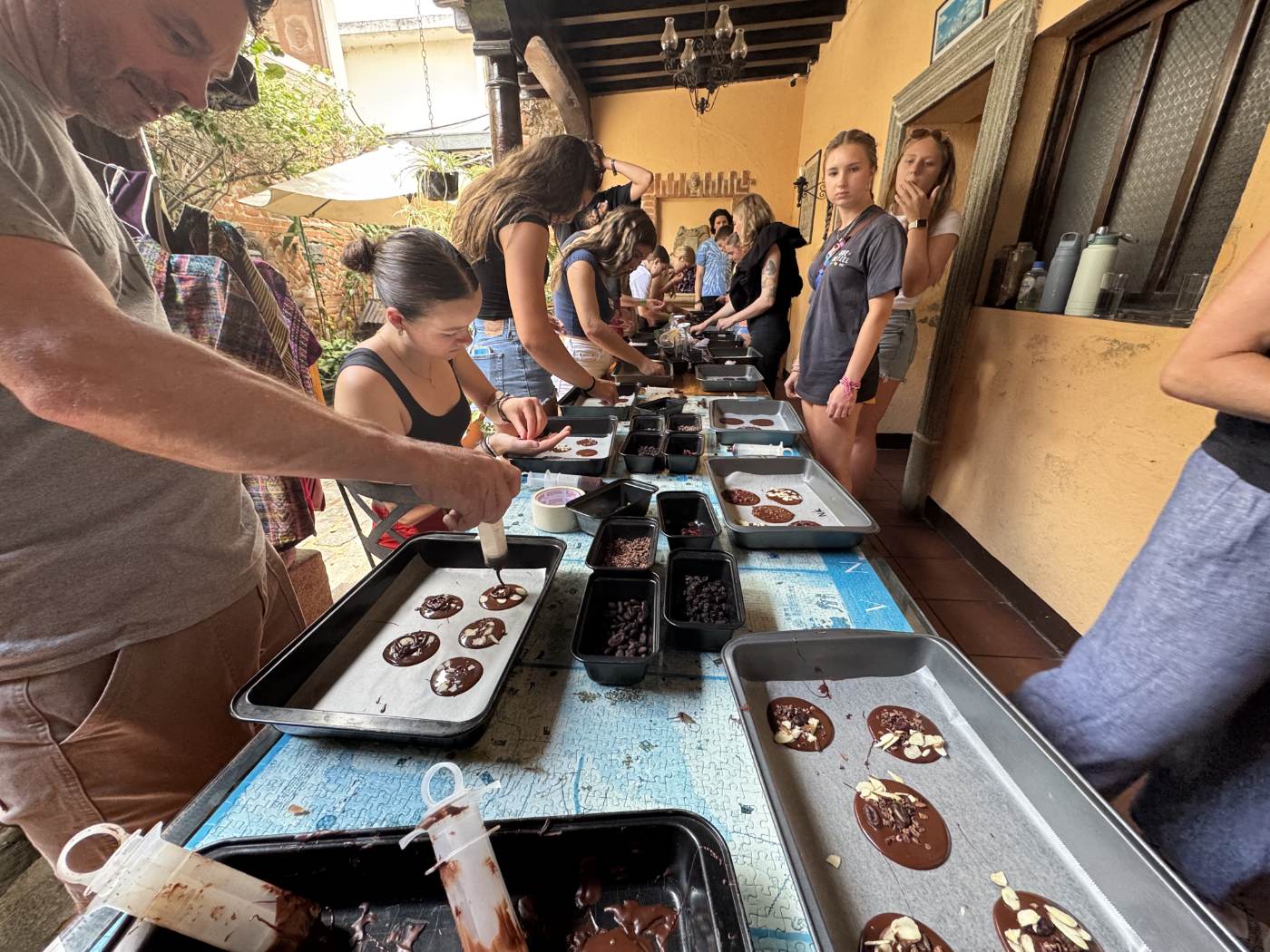
Students at a chocolate-making workshop in Antigua
DAY 8Antigua

Free Day in Antigua

Day 8 is intentionally open. A week of full immersion needs space to process before departure. Students choose between more cultural engagement and rest; both serve the program's goals.

Option 1: cultural activities
  • Chocolate-making workshop with women artisans
  • Traditional Guatemalan cooking class
  • Cooperative or artisan visits, museums, historic sites
Option 2: rest and reflection
  • Personal exploration and journaling
  • Cafes, shopping, and downtime
  • Processing the week and preparing for departure

Overnight: Boutique hotel, Antigua
Logistics: Group check-in morning and evening, buddy system maintained, urban safety protocols

The Santa Catalina Arch reflected in a rain puddle on an Antigua street
DAY 9Departure

Departure

Students leave Guatemala having spent nine days with women who lead by building, by planting, by teaching, and by protecting. They carry home a framework: leadership and environmental stewardship are one commitment to the communities and landscapes that sustain us.

Morning
  • Breakfast, checkout, and final group reflection
  • Optional last artisan market visit if time permits
  • Private transfer to La Aurora International Airport, Guatemala City

Logistics: Airport transfer, group document check, departure coordination

Impact partners

The Women and Organizations Who Lead This Program

These partnerships come from Somos's years of direct relationships with communities around Lake Atitlán. Community visit contributions and activity materials are built into the program cost, so partners are paid for their time and expertise.
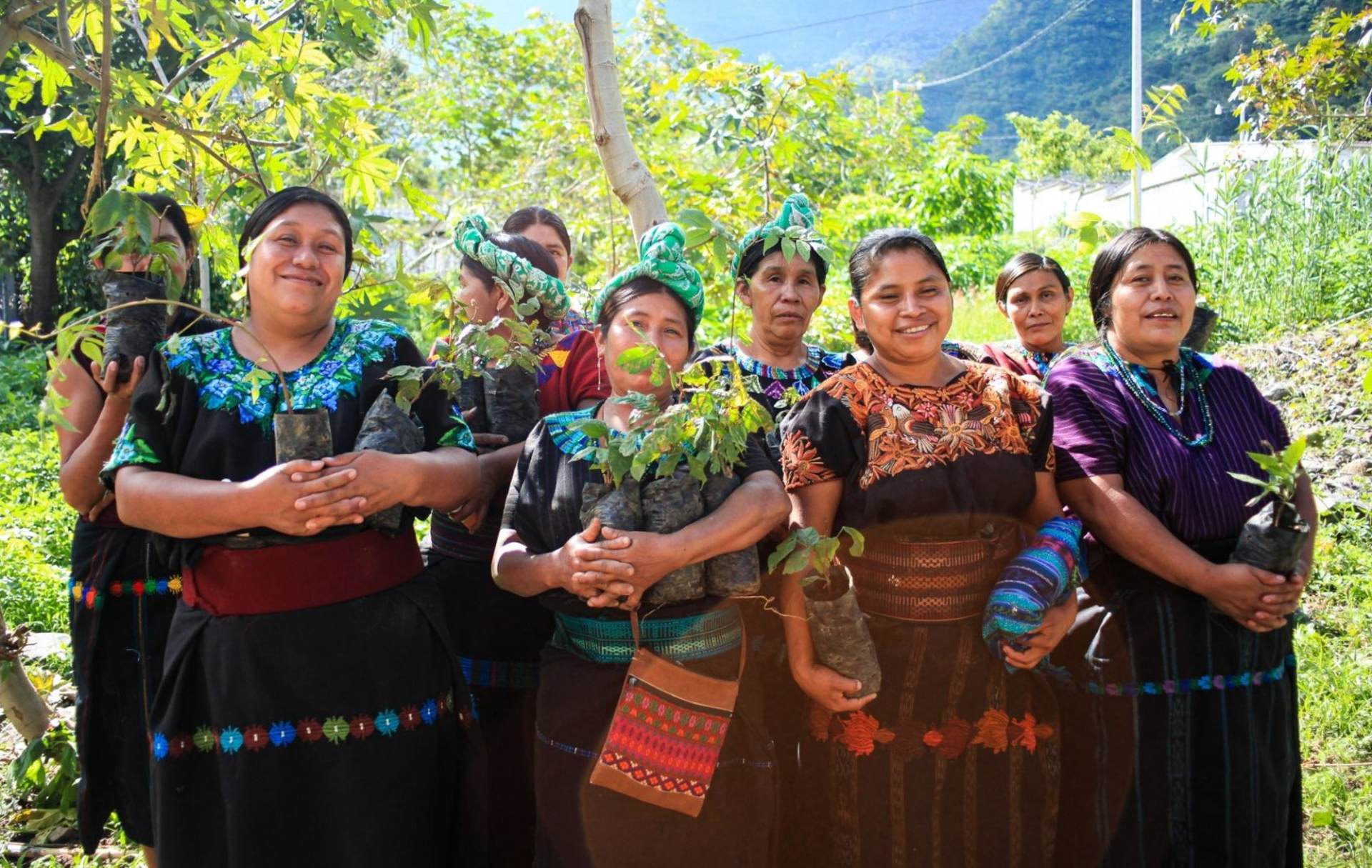
Women from Wellkind Guatemala's nursery holding seedlings
Main partner · Reforestation

Wellkind Guatemala

A grassroots environmental NGO focused on reforestation, watershed restoration, and sustainable agriculture in Indigenous communities around Lake Atitlán. The women who manage Wellkind's native tree nurseries are central to its model: Indigenous staff who serve as technical experts, community liaisons, and environmental educators. Participants spend a morning potting and preparing seedlings alongside them.

200,000+
trees planted since founding
50,000
trees a year, the annual goal
15+
Indigenous community partners
80%+
tree survival through community ownership

Student outcome: Students understand how Indigenous ecological knowledge, native species selection, and community ownership produce conservation results that last.

Lens of inquiry question: What does leadership look like when the same people leading a livelihood are leading the conservation?

Water · Day 4

Water for Life Global

A community-driven NGO addressing Lake Atitlán's water crisis through women-led programs, including Bienestar Comunitario, village water filters, and greywater treatment. Participants see filter distribution in action and meet women trained through its leadership program.

Student outcome: Students understand the lake's contamination sources and the community-led responses to them.

Lens of inquiry question: What does environmental leadership look like when the ecosystem you protect is the one you live inside?

Education · Day 5

MAIA School

An all-girls Indigenous school at Lake Atitlán founded to provide educational access and leadership development for Indigenous girls. Somos works directly with its founders, board, and head of school, so the exchange is a peer conversation between students.

Student outcome: Students hear from MAIA peers what their education has changed for them, and compare it with their own.

Lens of inquiry question: What does leadership look like when it starts with access to education?

Community health · Day 5

Konojel

A nonprofit in San Marcos la Laguna working on health, education, and entrepreneurship: the Healthy Babies nutrition program led by women educators, the Young Leaders Scholarship Program, and Konojel Restaurant, where women staff prepare the group's lunch.

Student outcome: Students see how women's employment and social enterprise sustain a community program.

Lens of inquiry question: What does leadership look like when it is organized around community need?

Artisan economy · Day 3

San Juan la Laguna Weaving Cooperatives

Women artisans practicing backstrap weaving and plant-based dyeing, who built their own supply chains and set their own prices. Participants weave or dye alongside artisan instructors.

Student outcome: Students understand cooperative organizing and fair trade as a form of economic independence.

Lens of inquiry question: What does economic leadership look like when it is built around traditional knowledge?

Learning outcomes

Academic and Experiential Outcomes

Women's Leadership in Indigenous and Grassroots Contexts

  • Direct engagement with women leading cooperatives, NGOs, conservation programs, and health initiatives across several lake communities
  • A structured school-to-school exchange with MAIA School students on education, leadership, and opportunity
  • Understanding of diverse leadership models: cooperative organizing, community health, conservation management, and educational access
  • Analysis of how traditional knowledge, economic independence, and stewardship intersect
  • Confidence in cross-cultural communication built through direct peer and community relationships

Environmental Stewardship and Community-Led Conservation

  • Understanding of Lake Atitlán's ecological crisis and Water for Life Global's women-led filtration and protection programs
  • Hands-on seedling work at Wellkind's women's nursery, contributing to its 50,000-tree annual goal across 15+ communities
  • How native species selection, watershed management, and community ownership drive Wellkind's 80%+ survival rate
  • Permaculture as a bridge between traditional Maya agriculture and contemporary sustainability science
  • Field observation that the people leading the cooperatives are also leading the conservation

Spanish Language in Authentic Contexts

  • Daily Spanish in navigation, markets, restaurants, and community interaction
  • Homestay option for domestic Spanish practice with host families across several days
  • Guided dialogue in Spanish with cooperative leaders, NGO staff, educators, and artisans
  • Vocabulary across registers: history in Antigua, cooperative economics in San Juan, environmental science with Wellkind

Indigenous Perspectives and Cultural Complexity

  • Kaqchikel and Tz'utujil Maya history, cosmology, and continuity at Iximche and San Juan la Laguna
  • How backstrap weaving, traditional agriculture, and native nursery management function as environmental stewardship
  • Colonization as a physical and ongoing structure: colonial churches on Maya foundations, land and water access as current Indigenous issues
  • Peer dialogue with MAIA students about identity, education, and what the next generation of Indigenous women leaders wants

Personal Growth and Leadership Development

  • Student agency in unfamiliar environments and open-ended inquiry
  • Physical challenge and team cohesion on the Volcán Pacaya hike
  • Reflection and journaling practice built into every day
  • Preparation before every community visit, so students never arrive cold
Before you go

Trip Preparation

Passports

Every traveler needs a passport valid at least 6 months beyond the departure date.

Flights

International airfare to and from Guatemala City (GUA) is included. Somos coordinates the group booking and airport transfers.

Travel Insurance

Comprehensive coverage is required for all students and adults, and is not included in the program cost.

Vaccinations

Consult a travel health clinic. Standard Guatemala recommendations apply.

Communication

Somos uses WhatsApp for in-country group communication. Every adult leader should have it installed before departure.

Money and Banking

Notify your bank of international travel before departure so cards work in-country.

Packing list

Highlands, Lake, and Lava

Antigua and Lake Atitlán sit in the highlands: warm days, cool evenings, and rain possible any afternoon.

Daily Wear and Travel Days

  • Breathable layers for warm days
  • A warm fleece or light jacket for evenings
  • Rain jacket
  • Comfortable walking shoes for cobblestones
  • Sandals for the guest house and boats

Field and Hiking Days

  • Closed-toe hiking shoes with grip for Pacaya's lava fields
  • Clothes that can get muddy at the nursery
  • Sun hat, sunglasses, and reef-safe sunscreen
  • DEET insect repellent
  • Daypack and refillable water bottle
  • Field journal and pen

Community Visits and Cultural Sites

  • Modest clothing that covers shoulders and knees for school, cooperative, and homestay visits
  • One nicer outfit for the welcome and farewell dinners
  • Swimwear and quick-dry towel for kayaking and the waterfall

Optional

  • Binoculars
  • Camera or GoPro
  • Small padlock
  • Headlamp

Documents and Essentials

  • Passport valid 6+ months
  • Printed travel insurance details
  • Emergency contact card
  • Personal medications in original packaging
  • Vaccination records
FAQ

Answers to Your Questions

For Teachers and Administrators

How does this align with our curriculum?

The program runs on one driving question and five lenses of inquiry, with outcomes in women's leadership, environmental science, Spanish, and Indigenous history. Somos adapts the framework to the subject areas your teachers want to activate and provides pre-trip and post-trip materials.

What is the student-to-adult ratio?

Groups of 10 to 20 students travel with your school's adult leaders plus a bilingual Somos field educator for the entire program, with local guides joining at each site. We set the chaperone ratio with you during planning.

How are medical emergencies handled?

Guides are CPR and first-aid certified and carry medical kits on every activity. Each location has a detailed emergency action plan, and Somos provides 24/7 in-country support with escalation protocols to local clinics and hospitals.

What is the commitment and cancellation timeline?

A $500 deposit per traveler holds a place. 50% of the program cost is due 90 days before departure and the remainder 60 days before. Cancellations more than 90 days out are refunded in full, excluding the deposit. See the Pricing tab for the full policy.

Can we customize the itinerary?

Yes. This itinerary is a starting point. Dates, accommodation options, activity balance, and curriculum emphasis are all adjusted to your school's priorities and your students' experience level.

For Parents and Students

Is this right for a first-time international traveler?

Yes. Many of our students have never traveled without family. Pre-trip preparation covers every community visit, and a Somos field educator is with the group from arrival to departure. Families choosing the homestay option get extra preparation for it.

How physically demanding is it?

Moderate. The two real efforts are the Tzununa waterfall hike (1.5 to 2 hours) and the Volcán Pacaya ascent, where a horse can be rented for about $15 to $20. Kayaking includes beginner instruction and PFDs are required.

How will students stay in touch with home?

Adult leaders and Somos staff communicate over WhatsApp throughout the trip. Before departure, families receive a daily communication framework so everyone knows when and how updates arrive.

Can dietary needs be accommodated?

Yes. Share dietary needs and allergies on the traveler forms and Somos briefs every restaurant, cooperative kitchen, and host family in advance.

What if my student gets homesick?

It happens, usually around day two or three. Daily reflection sessions, a steady group routine, and a field educator who checks in one-on-one give students somewhere to put it. Day 8 is left open for rest before the trip home.

How much spending money should students bring?

Nearly all meals are included. Students need money for 2 to 3 independent meals in Antigua, artisan purchases, and the optional Pacaya horse rental. Tips for guides, drivers, and host families are optional and separate; Somos shares a recommended range and tipping guidance before departure.

Program rate

Pricing and Logistics

Custom pricing is developed from final group size, specific inclusions, and airfare options. Adult leaders typically travel at a reduced rate or complimentary, depending on group composition. A detailed cost breakdown follows program confirmation.

Budget target
$3,550per student, airfare included
Duration
9 days, 8 nights
Group size
10 to 20 students, plus adult leaders
Dates
Flexible
Request a custom quote
Nights 2 to 5

Accommodation Options

Full Homestay

4 nights with families, San Juan la Laguna

Meals with Indigenous host families and daily Spanish in a real home. The deepest immersion, and the most demanding for students new to homestays.

Recommended

Split Stay

2 nights Bambu, then 2 nights homestay

Nights 2 and 3 at Bambu Guest House, nights 4 and 5 with host families. A balance of cultural immersion and program logistics that suits most groups.

No Homestay

4 nights at Bambu Guest House

Daily boat trips to every cooperative and NGO visit. The most flexibility for group programming and reflection sessions.

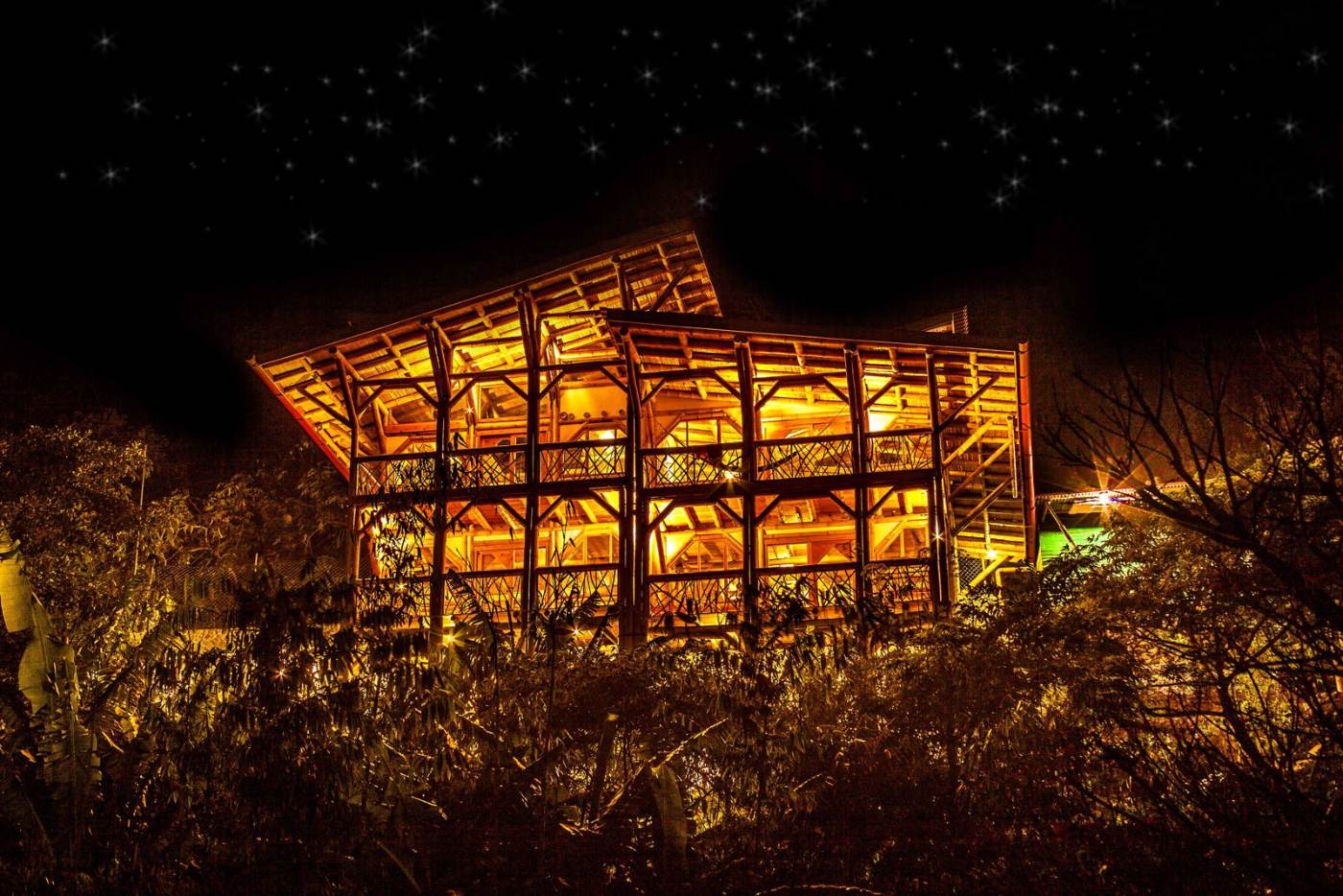
Bambu Guest House lit up at night, its bamboo frame glowing above the trees
Owned and operated by Somos

Bambu Guest House, Tzununa

A three-story natural bamboo structure overlooking Lake Atitlán and its volcanoes. Group common spaces host evening reflection and debriefs, and the lakeside position gives easy boat access to every community visit. Students sleep inside a building that teaches sustainable construction.

Included in the Program

Accommodations

  • 1 night boutique hotel, Antigua colonial district, on arrival
  • 5 nights at Lake Atitlán (Nights 2 to 6): Bambu Guest House, Tzununa, or homestay in San Juan la Laguna
  • 2 nights boutique hotel, Antigua, on return

Meals

  • All meals except 2 to 3 independent meals in Antigua
  • Host family meals on homestay nights, and community and cooperative lunches
  • Welcome and farewell dinners
  • Water and hydration on all field activities

Transportation

  • International airfare to and from Guatemala City (GUA)
  • All ground transport in private, licensed, insured vehicles, including airport transfers
  • All boat transport between lake communities

Activities and Guides

  • A bilingual Somos field educator for the entire program
  • Women in Guatemalan History walking tour; Iximche with an Indigenous guide; Volcán Pacaya guided hike
  • Weaving cooperative and natural dye workshop; Water for Life Global visit and filter distribution
  • MAIA School exchange; Konojel programs; Wellkind nursery work
  • Permaculture farm, Tzununa waterfall hike, kayaking or paddleboarding with instruction
  • All entrance fees, activity materials, and community visit contributions

Educational Support

  • Pre-trip preparation materials for teachers and students
  • Lens of inquiry facilitation, daily reflection sessions, and journaling materials
  • Post-trip resources and follow-up support

Safety and Logistics

  • 24/7 in-country emergency support
  • Risk management protocols and emergency action plans for every location

Not Included

  • Travel insurance (required)
  • Personal expenses and souvenirs
  • Optional tips for guides, drivers, and host families
  • Horse rental on Volcán Pacaya (optional, about $15 to $20)
  • Independent meals in Antigua (2 to 3 total)

Payment and Cancellation

Deposit$500 per traveler, non-refundable, honored for life toward any future program
90 days out50% of the program cost due
60 days outBalance due
More than 90 days outFull refund, excluding deposit
90 days or fewerNo refund

If Somos cancels for low enrollment, travelers receive a full refund including the deposit. Force majeure events may be rescheduled or refunded in part or full at Somos's discretion, excluding the deposit. Cancellation notice must be sent in writing to team@somos.travel. Full terms: Terms and Conditions.

Next steps

Take the first step on your journey today.

This itinerary is a starting point. We will shape it around your curriculum priorities, the subjects your teachers want to activate, and your students' experience level.

Start Planning Your Journey
Contact Shad Qudsi Somos Impact Travel shad@somos.travel WhatsApp +502 4681 4697